How to Sell Old Kanchipuram Silk Sarees for the Right Price
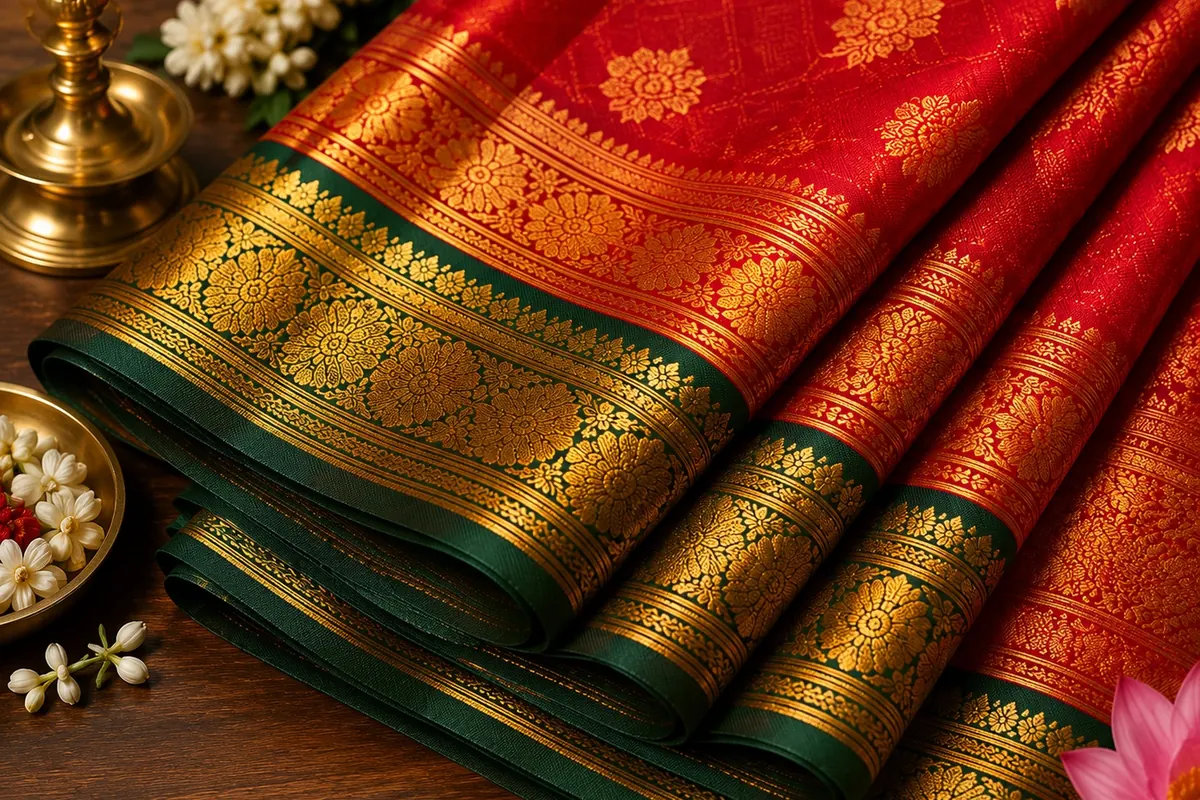
A Kanchipuram silk saree is rarely just a saree. It is the one you wore for your engagement, the one your mother saved for festivals, the one that has been folded in the same trunk for thirty years. So when you decide to sell old Kanchipuram silk sarees, you want two things: a fair price and a buyer who treats them with respect.
This guide walks you through what makes an old Kanchipuram valuable, how to check whether yours is genuine, how to prepare it for sale, and what a fair selling process looks like in Bangalore.
Why Old Kanchipuram Sarees Hold Their Value
Genuine Kanchipuram sarees are woven from heavy mulberry silk and, traditionally, pure zari made with real silver and a thin gold coating. The zari standard for Kanchipuram silk was reduced in 2012, so sarees woven before then often contain richer zari than newer ones. That is why a heavy wedding saree from the 1980s or 1990s can be worth more today than many people expect.
Three things drive the value of an old Kanchipuram:
- The zari: pure zari carries real silver value, which is often the biggest part of the price.
- The silk: thick, pure mulberry silk has its own resale value.
- The weave and design: traditional motifs, contrast borders and discontinued patterns add to the appeal.
For a full breakdown of the metal value, read our guide on old silk saree zari price per gram.
Is Your Saree a Genuine Kanchipuram?
Many sarees are sold as "Kanchi style" or "Kanchi pattu" without being woven in Kanchipuram. A few signs point to the real thing:
- Weight and feel: a genuine Kanchipuram feels heavy and firm, not thin or slippery.
- The border joint: many Kanchipuram sarees use the korvai technique, where a contrast border is interlocked with the body. Look closely where the border meets the body, especially on the reverse side.
- A separately woven pallu: in many traditional Kanchipurams, the pallu is woven separately and joined to the body. You may see a fine zigzag line where they meet.
- Labels and bills: a Silk Mark label, a GI tag or an old shop bill that says "pure zari" all help.
- Zari quality: real silver zari darkens evenly with age. Our guide on how to check pure zari in a silk saree explains simple home tests.
You can read more about the history of the weave on Wikipedia's page on Kanchipuram silk.
What Buyers Look at When Valuing a Kanchipuram
| Factor | Why it matters |
|---|---|
| Zari type | Pure zari has silver value. Tested zari has almost none. |
| Zari quantity | Broad borders, a heavy pallu and zari motifs across the body mean more metal. |
| Age | Older sarees usually carry richer zari. |
| Silk weight and purity | Heavier pure silk is worth more than thin or blended silk. |
| Condition | Tears, stains and weak silk reduce value, but do not make a saree worthless. |
How to Prepare Your Saree Before Selling
- Gather everything together. Take out all the silk sarees you are considering, including damaged ones. One evaluation for the whole lot saves time.
- Do not cut the border or pallu. Cutting out zari damages the saree and usually lowers the total value.
- Do not wash or polish the zari. Home washing can weaken old silk, and rubbing zari can strip its surface.
- Air the sarees for a few hours. If they have been stored for years, let them air in shade before the visit.
- Find old bills or labels. Proof of pure zari or pure silk supports a better evaluation.
- Take clear photos. If you want a preliminary estimate, photograph the full saree, the border, the pallu and any damage in daylight.
Your Options for Selling Old Kanchipuram Sarees
There are a few ways to sell, and each suits a different situation:
- Specialist old silk saree buyers: they evaluate both the silk and the zari, buy damaged pieces and pay on the spot. This is the simplest option for most families.
- Online resale platforms: these can work for sarees in excellent condition with a designer label, but you handle photos, listings, buyer questions and shipping, and payment can take weeks.
- Resale boutiques: some accept sarees on consignment, but you are paid only when the saree sells.
Whichever route you choose, make sure the buyer explains how the price is worked out. A trustworthy buyer will not hesitate to weigh your saree in front of you and show you the reasoning.
Sell Old Kanchipuram Silk Sarees with Nakshatra
Nakshatra Kanchipuram Society has been buying old silk sarees since 1985. We are old silk saree buyers in Bangalore with branches across the city and Karnataka, and Kanchipuram silks are at the heart of what we do.
- Free doorstep evaluation, with no obligation to sell
- Your sarees are weighed in front of you
- An itemised quote for every saree
- Instant payment by cash or UPI if you accept
- Damaged, torn and stained sarees also evaluated
Call or WhatsApp +91 97408 36690, or send photos through our free evaluation form.
Frequently Asked Questions
How much can I get for an old Kanchipuram silk saree?
It depends on the zari type and quantity, the silk weight and the condition. A heavy pure zari saree is valued mainly on its silver content and the day's silver rate, while a tested zari saree is valued mainly for its silk.
Do you buy Kanchipuram sarees with tested zari?
Yes. Tested zari has little metal value, but good pure silk still has resale value.
Can I sell a Kanchipuram saree without the bill?
Yes. A bill helps, but an experienced buyer can evaluate the silk and zari without one.
Should I dry clean my saree before selling?
There is no need. Airing it in shade is enough. Cleaning does not usually change the value of the zari.
Ready to Sell Your Old Kanchipuram Sarees?
Book a free doorstep evaluation anywhere in Bangalore. Weighed in front of you, paid on the spot.