How to Check Pure Zari in Silk Saree: 8 Simple Tests You Can Do at Home
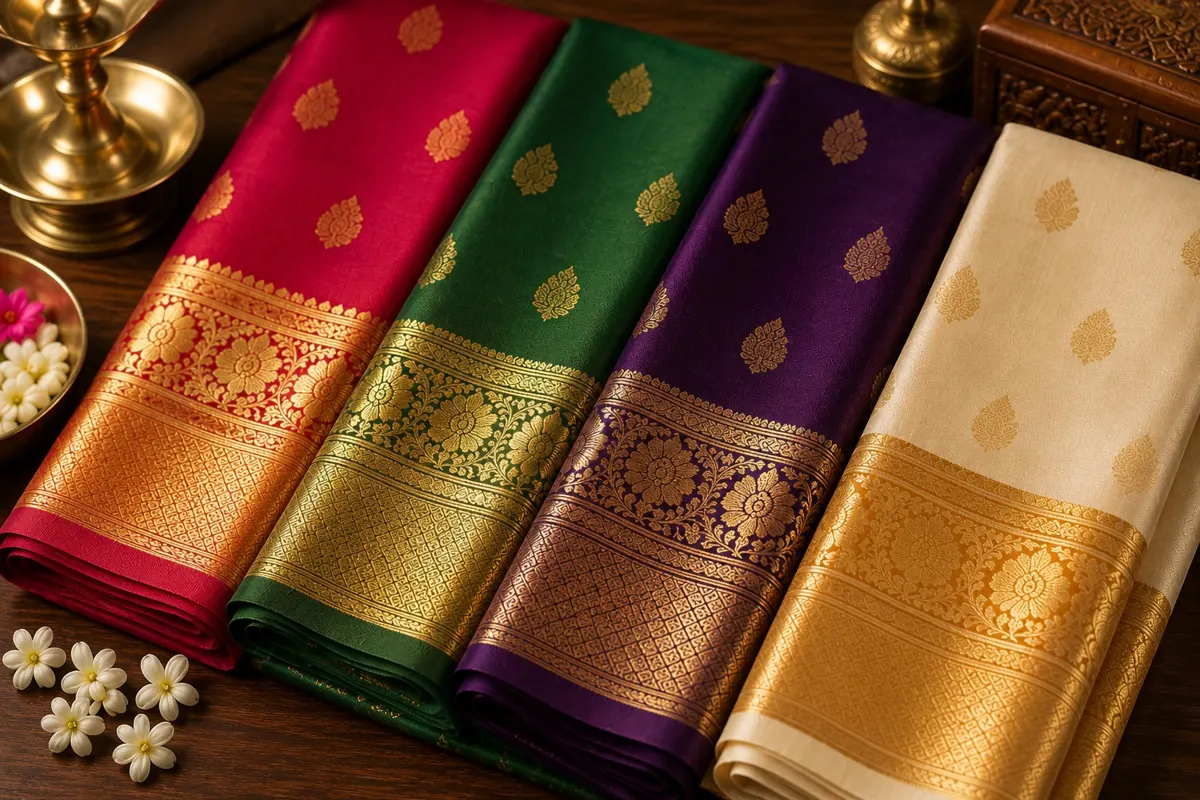
You have a beautiful old silk saree with a rich golden border. It looks expensive, it feels heavy, and your mother always called it "pure zari". But is it? Knowing how to check pure zari in a silk saree matters for two reasons. If you are buying, it tells you whether the price is fair. If you are selling, it tells you whether your saree carries real silver value.
The good news is that you do not need a lab to get a strong idea. Below are eight simple checks, from the easiest to the most reliable, along with what to avoid so you do not damage your saree.
Pure Zari, Tested Zari and Imitation Zari: The Basics
Before you test, it helps to know what you are looking for:
- Pure zari (real zari): a silk core wrapped with silver wire and coated with a thin layer of gold. This is the zari that carries real metal value.
- Tested zari: a copper wire core with silver or gold coloured plating. It looks similar when new but has no precious metal value.
- Metallic or plastic zari: a polyester film with a metallic finish. It is the lightest and cheapest type.
Pure zari is the traditional thread of genuine Kanchipuram silks, and it is a big part of why these sarees hold their value. If you want to know how that value is calculated, read our guide on old silk saree zari price per gram.
1. Look for the Silk Mark Label and Old Bills
Start with the paperwork. Many genuine silk sarees carry a Silk Mark label, issued under a scheme run by the Silk Mark Organisation of India. Note that Silk Mark certifies pure silk, not pure zari, but it is still a useful starting point. An old shop bill that says "pure zari" or lists the zari weight is even better evidence.
2. Feel the Weight
Pure zari contains real silver, so a saree with a broad pure zari border and pallu feels noticeably heavy. If a saree has heavy zari work but feels surprisingly light, the zari may be tested or metallic. This is only a first impression, because silk thickness also affects weight, but it is a helpful clue.
3. Check the Colour and Shine
Pure zari has a soft, warm golden glow rather than a bright, glittery shine. Imitation zari often looks too shiny, almost like foil, and the gold can look slightly yellow or brassy. Look at the zari in natural daylight, not under a tube light, for the clearest view.
4. See How the Zari Has Aged
Age gives away a lot. Pure zari tends to darken evenly over the years, moving towards a dull grey or blackish tone as the silver oxidises. Tested zari with a copper core often shows reddish patches where the plating has worn off, and sometimes a greenish tinge. If your old saree's zari has turned evenly dark rather than patchy red, that is a good sign.
5. Do the Gentle Rub Test
Pick a small, hidden area such as the inner end of the pallu or the edge of the border near the hem. Rub the zari gently with a fingernail or a soft cloth.
- If you see silver white underneath, it suggests real silver wire.
- If you see a reddish or copper colour, the zari is most likely tested zari.
- If the surface peels like plastic film, it is metallic zari.
Rub lightly. You only need a tiny spot to see the base metal.
6. Examine a Loose Thread Up Close
Most old sarees have a few loose zari threads at the cut ends of the pallu. Take one and look at it closely, ideally with a magnifying glass. In pure zari you will see a silk thread at the centre with flat silver wire wound around it. In tested zari, the wire underneath the plating is copper coloured.
7. Try the Burn Test on a Single Loose Thread
This is a reliable home test, but do it carefully. Take one loose zari thread that has already come away from the saree. Never burn anything on the saree itself.
- Hold the thread with tweezers over a plate and light the end.
- Pure zari burns away its silk core with a burnt hair smell and leaves a fine silver white metal wire behind.
- Tested zari also leaves wire behind, but it shows a reddish copper colour once the plating burns off.
- Plastic or metallic zari melts into a hard bead and gives off a chemical smell.
Keep water nearby, keep children away, and stop if you are not comfortable doing it. You can also leave this step to an expert.
8. Get It Checked by an Expert
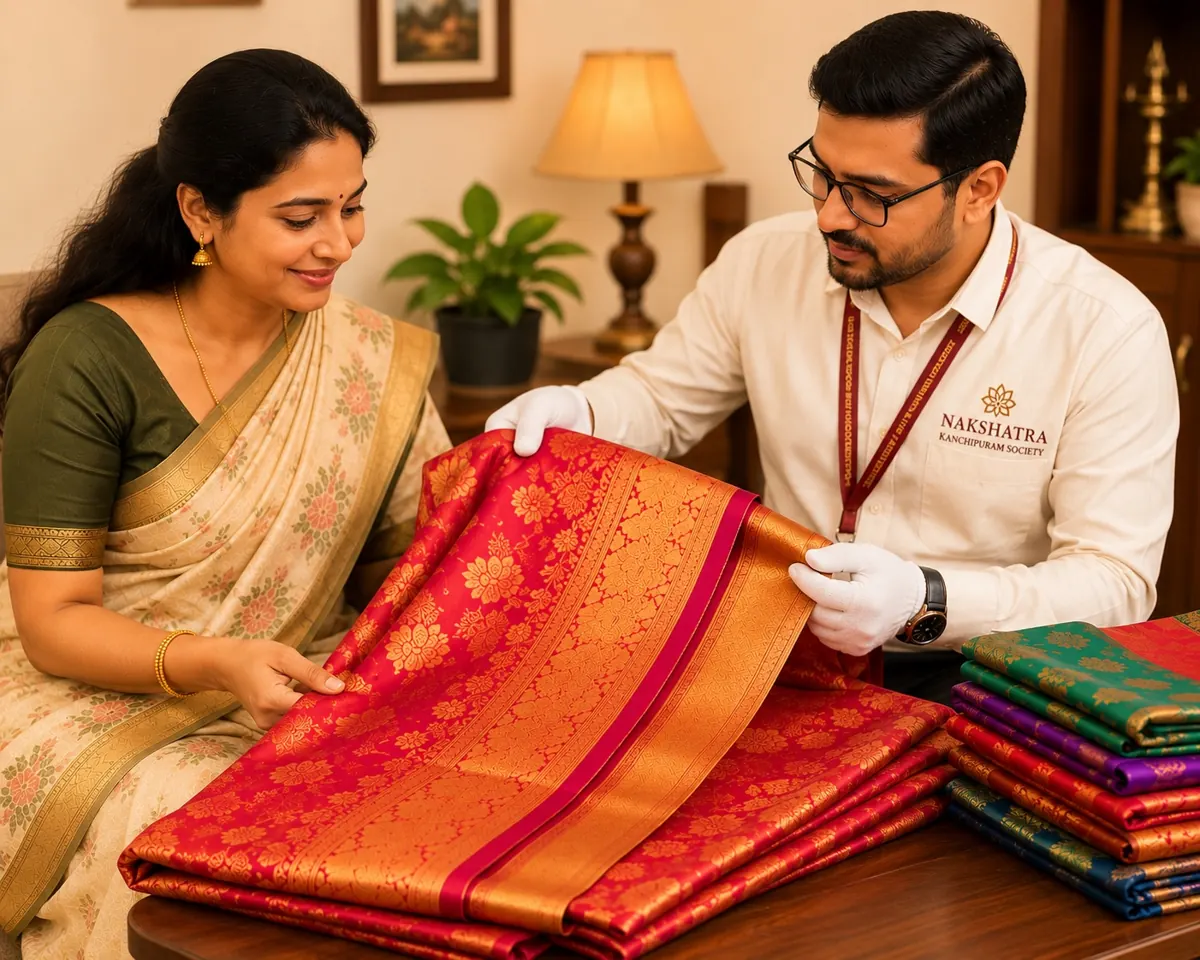
Home tests give you a strong indication, but the only way to be certain is an expert evaluation. Experienced silk buyers can judge zari quickly by look, feel and weight, and specialised testing can measure the actual silver content. If you plan to sell, this step also tells you exactly what your saree is worth.
Quick Comparison: Pure Zari vs Tested Zari
| Check | Pure zari | Tested or imitation zari |
|---|---|---|
| Weight | Heavy for the amount of zari | Lighter than it looks |
| Shine | Soft, warm glow | Bright, foil like shine |
| Ageing | Darkens evenly to grey or black | Reddish patches or greenish tinge |
| Rub test | Silver white base | Copper red base or plastic film |
| Thread core | Silk core with silver wire | Copper wire or polyester film |
| Burn test (loose thread) | Silver white wire remains, burnt hair smell | Copper red wire remains, or melts into a bead with a chemical smell |
| Resale value | Significant, based on silver | Little or none as metal |
What Not to Do When Testing Zari
- Do not cut pieces of border to test them. It damages the saree and lowers its value.
- Do not use acids or chemicals. They can ruin both the silk and the zari.
- Do not burn anything attached to the saree. Use only a thread that has already come loose.
- Do not trust a single test. Combine two or three checks before drawing a conclusion.
Why Pure Zari Matters When You Sell
When you sell an old silk saree, pure zari is often the biggest part of its value, because it contains real silver. Older Kanchipuram sarees in particular were woven with richer zari, as the GI linked zari standard was reduced in 2012 (source: FashionUnited). So that heavy saree in your cupboard may be worth more than you think.
Tested zari sarees still have value too. Good quality pure silk is always worth evaluating, even when the zari carries no metal value.
Get a Free Zari Check from Nakshatra in Bangalore
Not sure what is in your saree? Nakshatra Kanchipuram Society has been evaluating and buying old silk sarees since 1985. Our experts visit your home, check the silk and zari in front of you, and give you an itemised quote, all free and with no obligation to sell.
We buy Kanchipuram, Mysore, Banarasi, bridal and antique silks, including damaged sarees. Call or WhatsApp +91 97408 36690, or fill in our free evaluation form. Learn more about how we work on our old silk saree buyers in Bangalore page.
Frequently Asked Questions
How can I tell if my silk saree zari is real at home?
Combine a few simple checks: the weight, a soft warm shine, even darkening with age, a silver white base in a gentle rub test, and a burn test on one loose thread. Two or three matching results give you a strong indication.
Does the Silk Mark label prove the zari is pure?
No. Silk Mark certifies that the silk is pure. It does not certify the zari. Look for an old bill or get an expert check to confirm the zari.
Why has my old zari turned black?
Pure zari contains silver, and silver darkens as it oxidises over the years. Even, dark discolouration is common in old pure zari sarees and is usually a good sign.
Is a tested zari saree worth selling?
Yes, if the silk is good. Tested zari has no metal value, but pure silk still has resale value.
Can you check my saree's zari for free?
Yes. Nakshatra offers a free doorstep evaluation across Bangalore and Karnataka, with no obligation to sell.
Is Your Saree Pure Zari? Let Our Experts Check for Free
Free doorstep evaluation, weighing in front of you, and instant cash or UPI payment if you choose to sell.